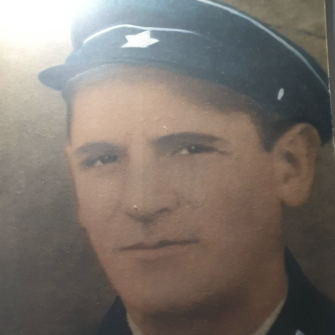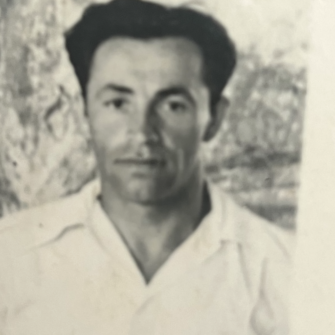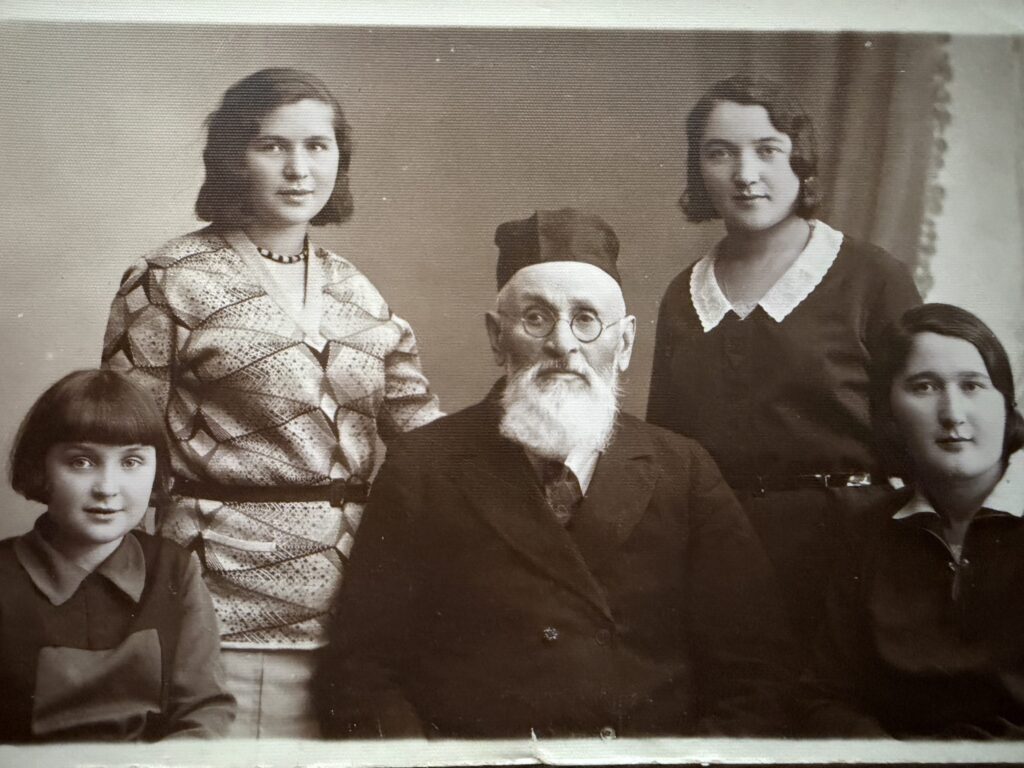
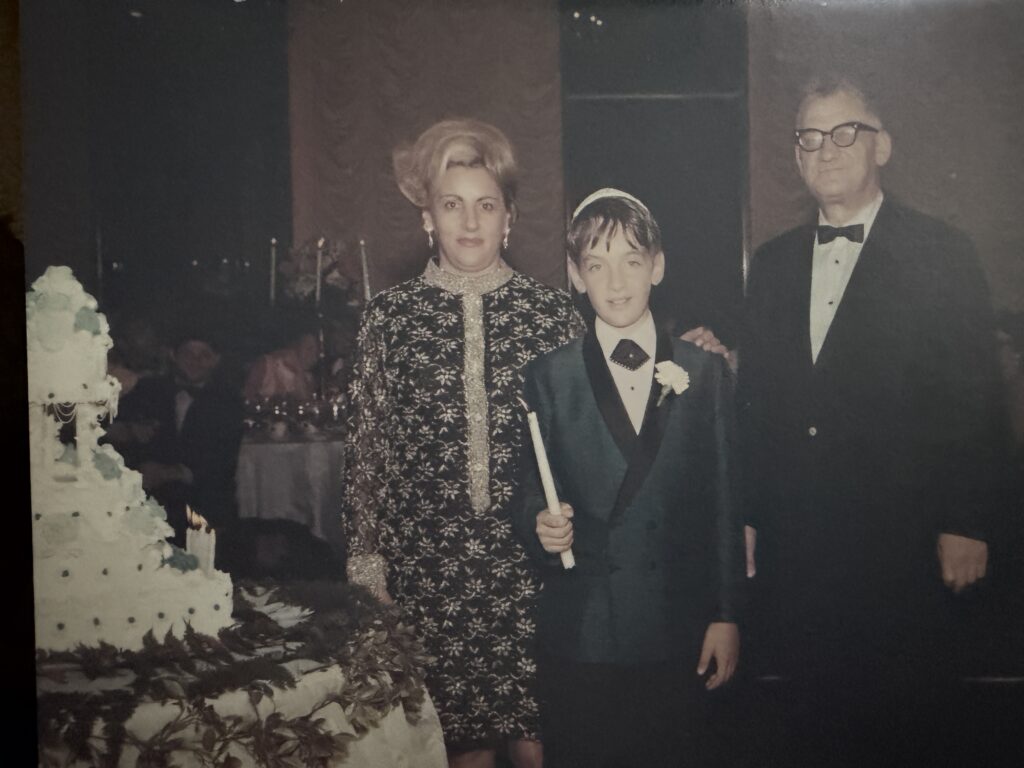
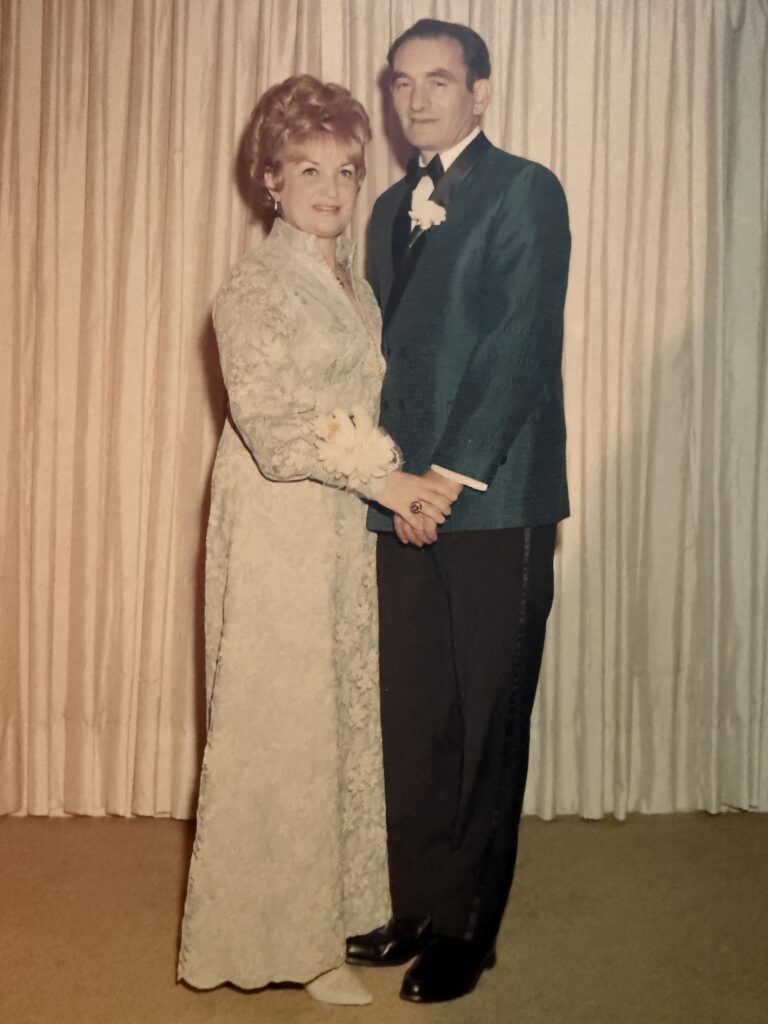
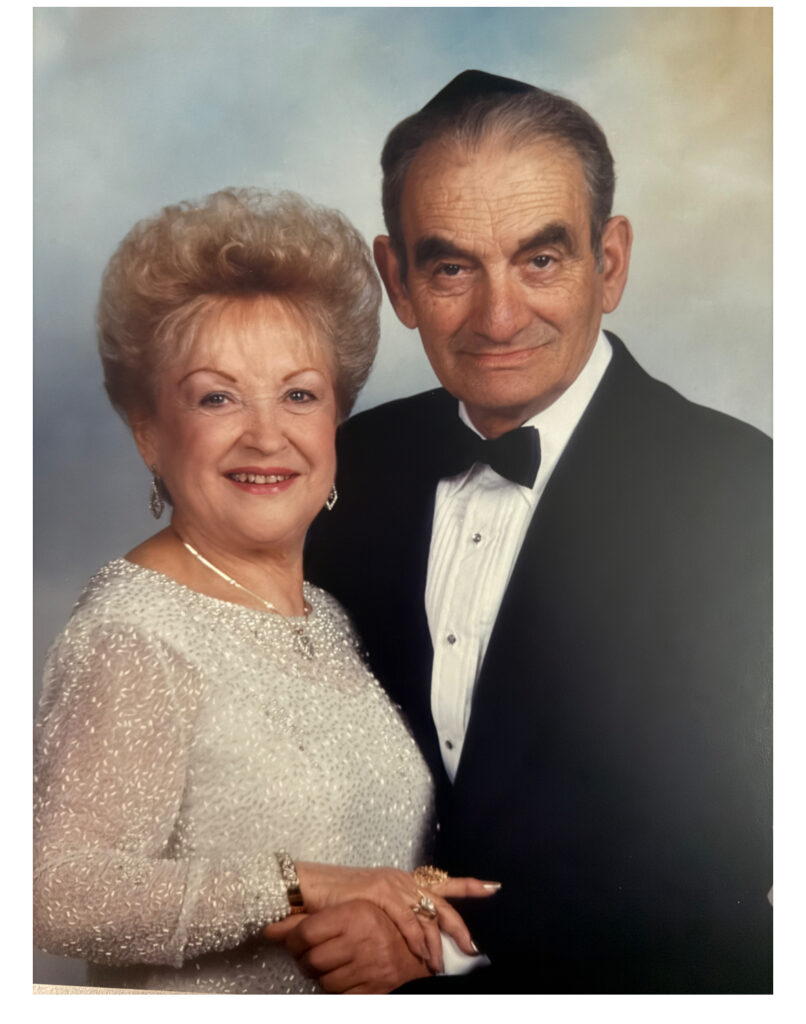
Frieda Feit was born on August 5, 1922, the youngest child of David and Chaya Slucki. She grew up in Lida, then part of Poland, with her three older sisters, Rachel, Szyfra, and Rasza Lea. Little information survives about Frieda’s childhood, but her son David remembered her as a strong-willed and determined woman, qualities that would become essential to her survival during the Holocaust.
Following the invasion of Poland in September 1939, Lida came under German occupation. The Jewish population faced escalating persecution, forced labor, confinement, and mass murder. On May 8, 1942, German forces and their collaborators carried out a major killing action against Lida’s Jews. Frieda’s parents and her three sisters were murdered during this killing action.
Frieda survived and eventually escaped into the surrounding forests. There, she joined the Bielski partisans, the Jewish partisan community led by Tuvia Bielski and his brothers. Unlike many partisan formations that concentrated primarily on armed operations, the Bielski group also sought to provide refuge for Jews escaping Nazi persecution. The Bielski group was also different from other partisan groups since they allowed women and children to join their group even if they did not participate in combat missions. However, Frieda participated in combat missions against the Nazis as a sniper for the partisan group.
Life in the forest presented its own dangers. Food and other necessities were scarce, and the partisans remained under constant threat from German forces and their collaborators. Frieda’s son later described her as courageous and independent, a young woman who had been left largely on her own and had to develop the strength necessary to survive.
For a young woman in the partisans, life was particularly challenging, and they often found it necessary to pair up with a male partisan for protection. Frieda herself became a “forest bride,” but it is unknown whether she actually married her protector.
After the war, Frieda lived in the Eschwege displaced persons camp, where she did not know if the person she was “married” to in the forest survived the war at all. She eventually learned he had survived, but by then they had married different people.
During her time in the DP camp, she met Joseph Feit and formed a relationship with him. In 1948, Frieda immigrated to the United States, where her aunt and uncle lived. Joseph Feit also immigrated in 1948, and they initially settled in New York and married in 1950. Their daughter Ann was born in 1951, and their son David followed in 1956.
Family became central to Frieda’s postwar life. Her son remembers her as intensely devoted to her children and grandchildren and particularly protective of those she loved. She maintained a Jewish home and worked to preserve Jewish traditions within the family. Her experiences during the Holocaust remained part of who she was, but she succeeded in building the family life that Nazi persecution had once threatened to make impossible.
Frieda lived to see her family grow to include four grandchildren. She died in 2001 at the age of 79.
Frieda Feit is remembered as a woman who loved her family, but also as a fierce fighter who actively resisted the Nazis during the Holocaust. As a young woman who had lost her parents and sisters, she entered the forests. She became part of a Jewish partisan community at a time when simply surviving required extraordinary determination. Her role as a sniper further demonstrates that women in the partisans were not only refugees or dependents but could also participate directly in armed resistance.
Her experiences also reveal the complex realities women faced in partisan groups. Relationships formed in the forests could provide companionship and emotional support. Still, they could also stem from the practical need for protection in an environment marked by hunger, violence, and insecurity. Frieda’s experience as a “forest bride” reflects the difficult choices some Jewish women made while attempting to survive under extraordinary circumstances.
Frieda’s life represents multiple forms of resistance. In the forests, she resisted with a weapon in her hands. After the war, she resisted through rebuilding: creating a home, raising children, maintaining Jewish traditions, and ensuring that another generation would carry her family forward. Her story preserves the memory not only of a Jewish woman who survived the Holocaust, but of a partisan, a mother, and a woman who rebuilt a life after unimaginable loss.