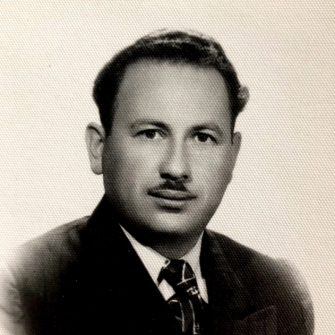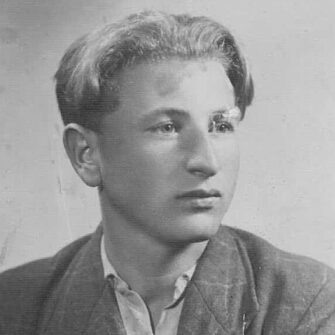
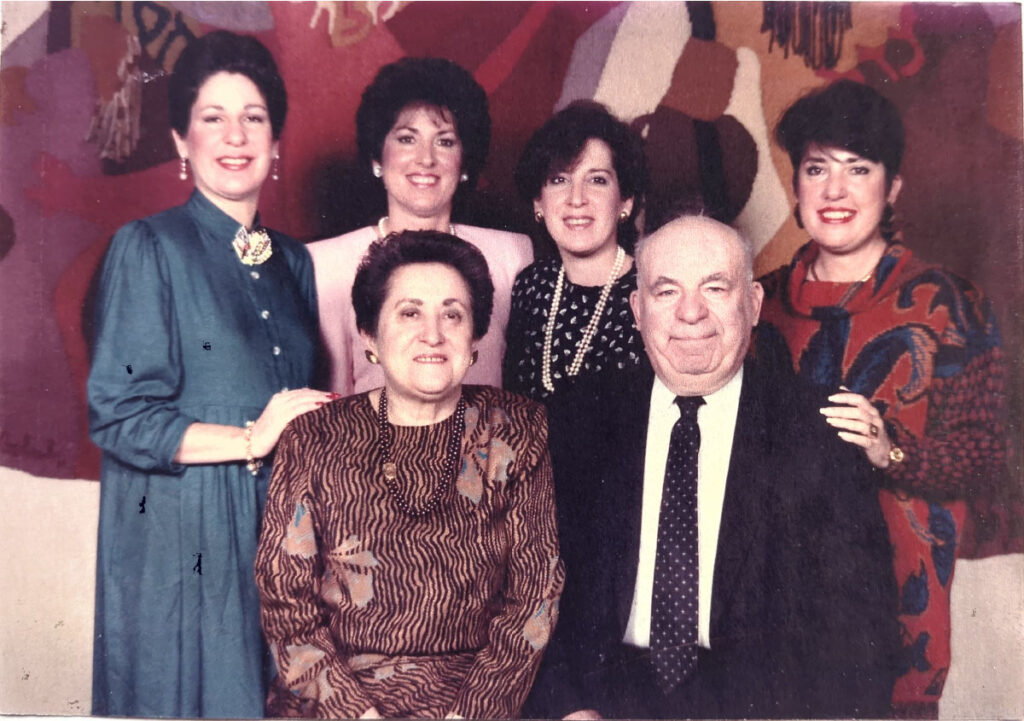
Julius (Yehuda) Rytman was born on July 13, 1925, in the village of Dokshitz-Parafianov in Belarus. He lived with his parents, Eli and Itka, along with four younger siblings. His parents ran a small inn, and his father and grandfather were foresters who cut and sold trees for lumber.
When Julius was 15, his father warned him that bad times were coming and encouraged him to go into hiding. In June 1941, the German Army launched Operation Barbarossa, the invasion of the Soviet Union. Julius hid in the woods for several days, along with other people from his village. He took a chance to check on his family after the German occupation began, but the family was gone. A neighbor told him that the Germans came and killed all the Jews in the village, including Julius’ 104-year-old grandfather.
Devastated, Julius returned to the forest where he and other young survivors organized a partisan group to fight back against the Nazis and their collaborators. Julius was captured by the Germans and marched into the forest, where prisoners were forced to dig a ditch. Everyone was lined up on one side of the ditch, with the Germans lined up on the opposite side. Julius was at the far end of the ditch. When the soldier across from him turned his head away, Julius quickly ran, escaping the soldier’s bullet.
Julius reunited with his partisan group after his narrow escape. As the Russian Army moved west in 1943, it came to the area where Julius’ group was fighting. The Russians were led by General Viktor Panchenkov, but he was known far and wide as “General Platton.” Julius’ group was then absorbed by the Russians. Half remained with the General, and the others were sent to the front. Julius became one of the General’s bodyguards.
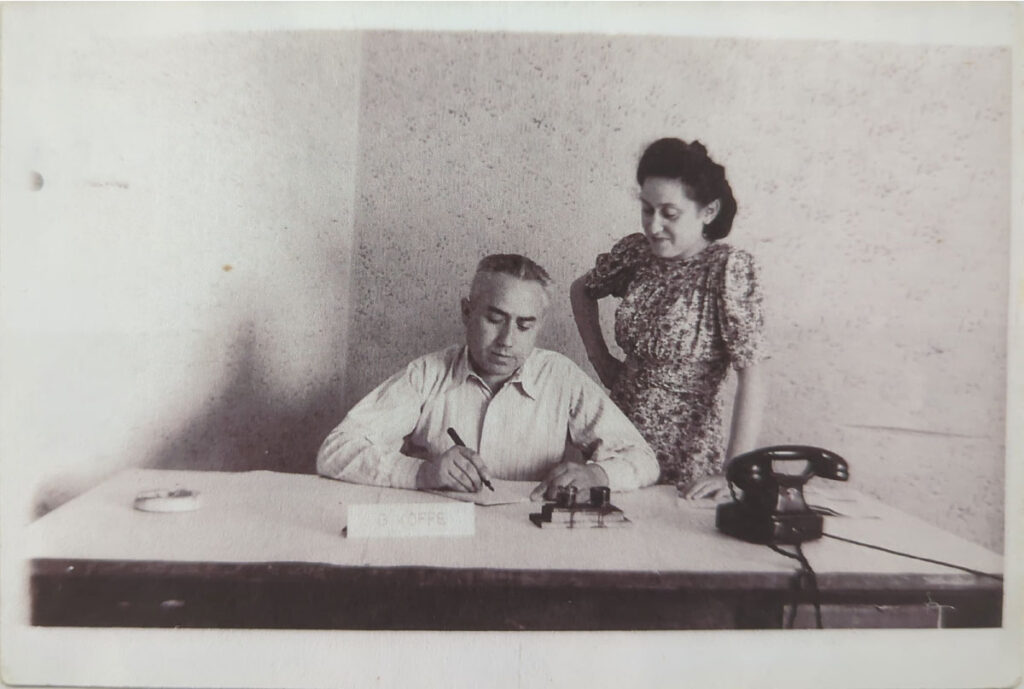
With General Platton in charge of the region, the Russians organized the various partisan groups to fight and decimate the German Army. When the Russians moved west toward Germany, General Platton put each of his favored partisans in charge of the railroad stations. Railroad stations were centralized; those who controlled the stations controlled the area. At just nineteen years old, Julius was put in charge of a station. He met many people there, including a young girl named Dora Gurewicz who was making her way home from Russia.
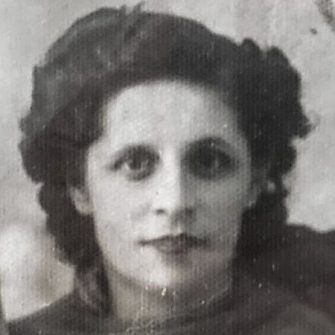
Dora was born in 1929 to Baila and Yerachmiel Gurewicz. The Gurewicz family lived in a small city called Volozhin (Valozhin) in the Minsk region of Belarus. Dora grew up speaking Polish and Russian. Her father owned a small trucking company, which provided his family with a comfortable home and a good life.
Every year, Dora went to summer camp with her sisters. In the summer of 1941, her sisters did not want to go to summer camp, so Dora boarded the bus by herself. When the Nazis invaded the Soviet Union in June 1941, her camp leaders, learning that the German Army was approaching, evacuated everyone into Russia. The children were placed in orphanages where they were safe from the Germans, but they had little food and warmth in the harsh winter.
When the war ended, sixteen-year-old Dora began to search for her family. She arrived at the train station nearest to her city, Volozhin. At the station, she asked Julius for directions to Volozhin. Julius gave her a ride into the city. Dora’s home had been confiscated by another family. The woman who answered the door was wearing her mother’s dress and shouted at Dora, telling her she had no right to be there. Dora soon learned that when the Germans came, her entire family was shot in front of their home.
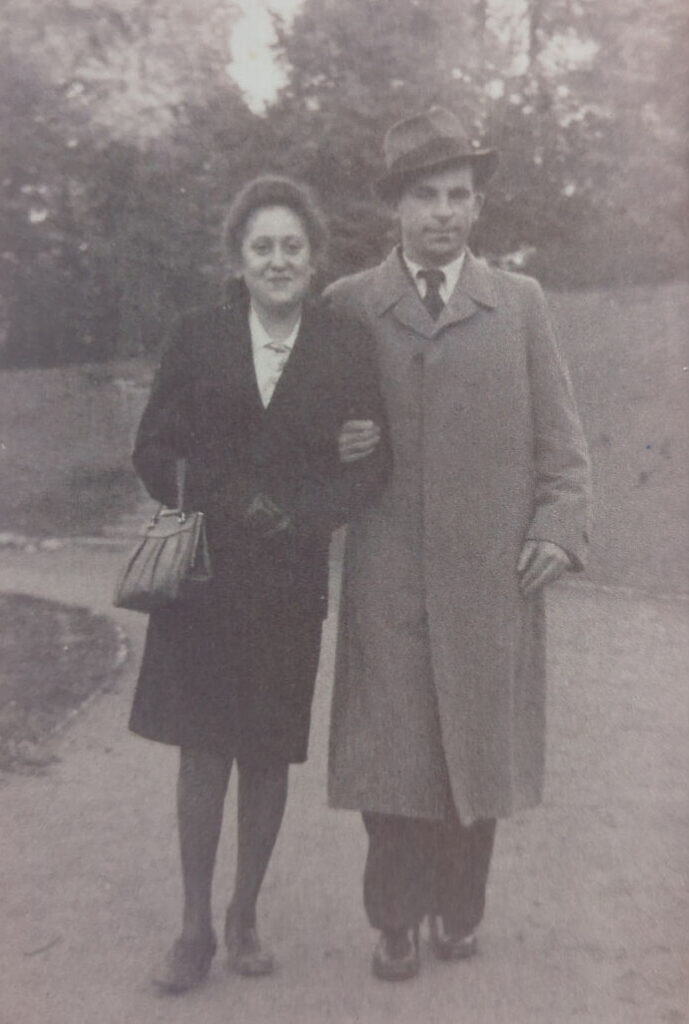
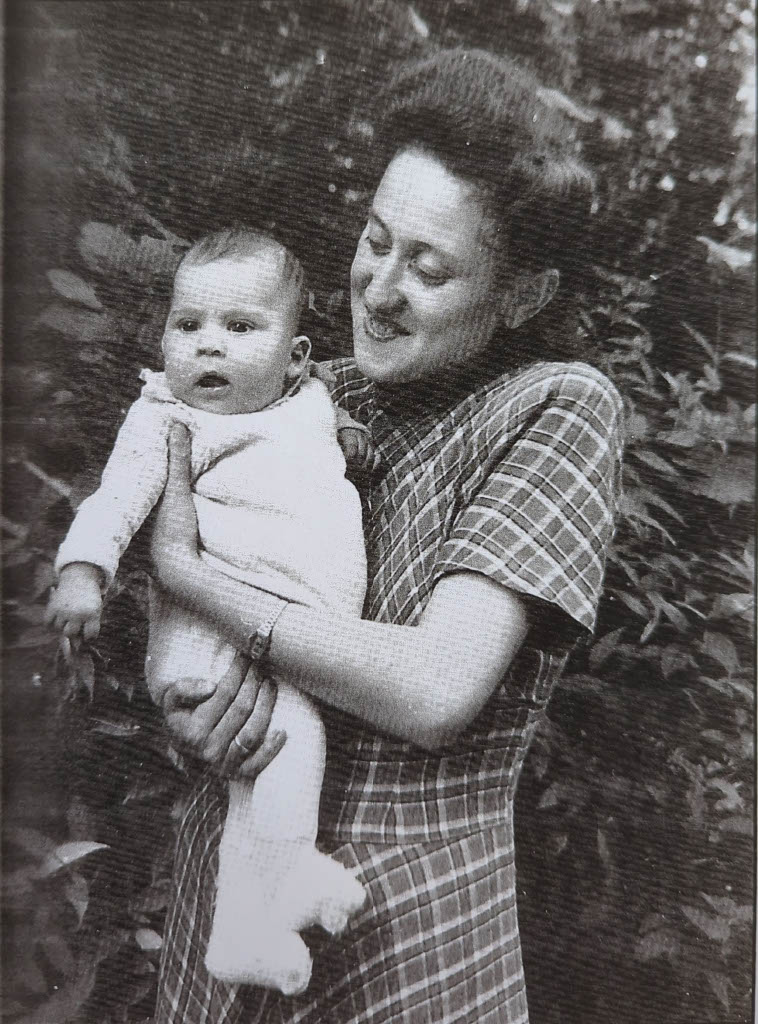
Dora returned to the train station, once again meeting Julius. After talking, they realized they were both very alone in the world. Julius and Dora were married in 1945. They made their way to Berlin, along the way becoming reacquainted with a partisan named Yitzhak (Irving) from the Bielski Brigade. When the Bielskis and Julius’s group met, the two young men, Julius and Yitzhak, would talk. Now, together with their wives, they continued on their way to Berlin, where they hoped to build a new life. Julius and Dora’s first child, Baila, was born in 1948. Being in the American Sector of Berlin when the Berlin Airlift began, the Americans evacuated the survivors to Foerenwald DP camp.
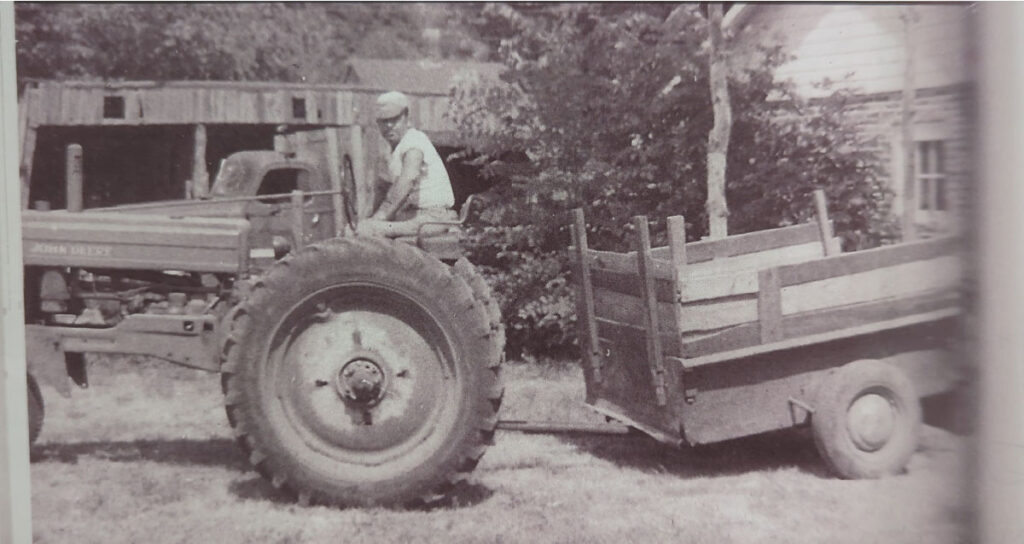
Julius had relatives in Connecticut, USA, making it possible for Julius, Dora, and Baila to get their immigration papers. The process of getting papers was arduous. Different departments required specific forms to prove their marriage. With each document needed, they had to have another “wedding.” They departed Germany in March 1949. Their ship docked in NYC, where they were met by their relatives. Shortly after their arrival, they bought a farm in Preston, Connecticut, with help from relief organizations. Julius milked the cows in the morning and afternoon, then brought the milk to the dairy down the road.
By 1958, Julius and Dora had three more girls, and their farm was growing. In the 1960’s, their grain was sold to other farmers in the region. The chickens’ eggs were sold to markets and major chains across New England and New York. After Julius sold his business, he raised cattle and brought them to market.
Dora was an active member of the community, serving as the President of the local Hadassah and UJA chapters. Unable to complete her education because of the war, Dora decided to attend college. In 1993, she earned her BA degree from Connecticut College and went on to earn her Master’s degree and a PHD from Brown University. Dora translated Russian documents into English for the US Coast Guard Academy and taught at the University of Hartford.
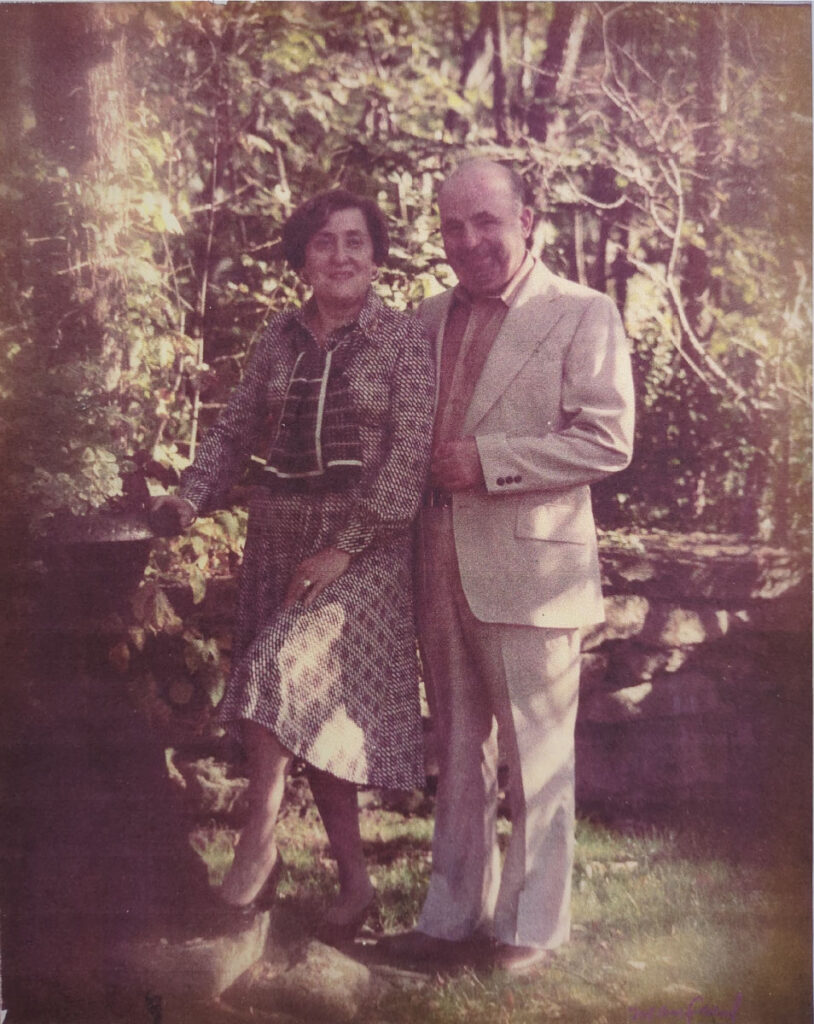
Julius passed away in August 2004, and Dora passed away in March 2013. They have eight grandchildren.