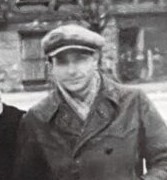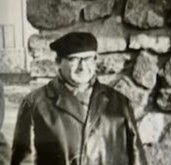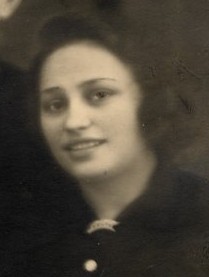
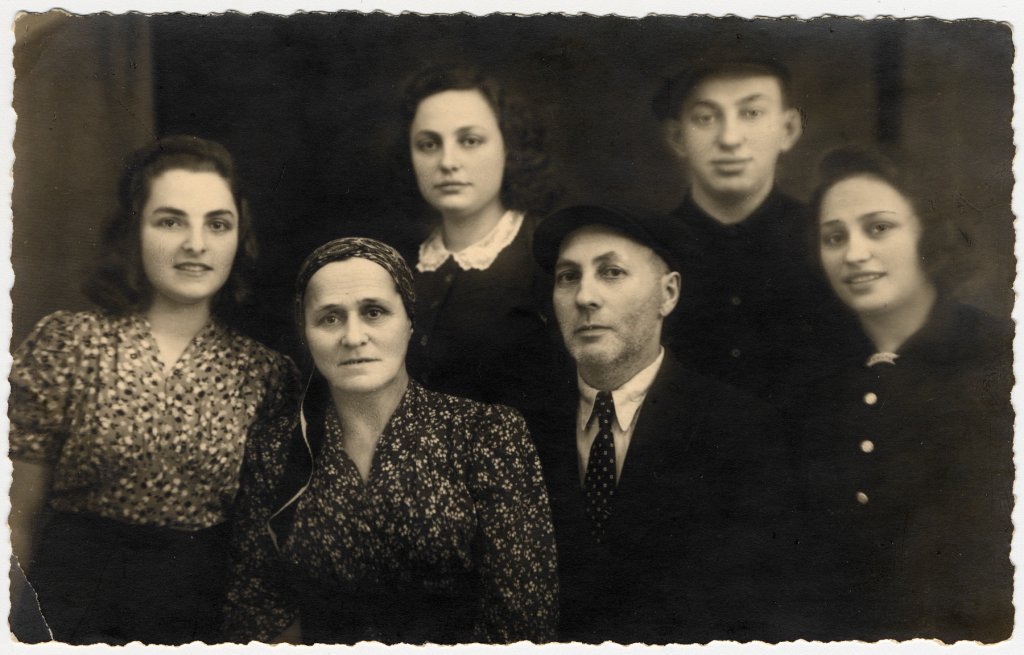
Esther Klug (born Esther Ass) was born on June 5, 1928, in Novogrudok, Poland. She lived with her parents, Yaakov Menachem and Baila Ass, along with three older siblings: Itke, Rochel, and Yosef. Her father owned a bakery, and her family was strictly Orthodox.
On September 17, 1939, the Soviet Union annexed Novogrudok in the Molotov–Ribbentrop Pact with Germany. In June 1941, Germany broke the pact and invaded the Soviet Union. German forces entered Novogrudok on July 4, 1941 and occupied the village. The Jews of Novogrudok and its surrounding area were murdered in mass killing operations from July 1941 to May 1943.
In December 1941, a ghetto was established where Jewish laborers and their families were concentrated. The Ass family worked outside the ghetto on nearby farms. The women worked in the fields, while Esther’s brother, Yosef, and their father took care of the horses, overseen by a Czech supervisor in the German Army.
Between December 5-8, 1941, the Germans rounded up the Jewish community and forced them into the town’s bombed-out courthouse, where the shattered windows let in the bitter cold. On December 8, 1941, a selection was made. The children, women, elderly, and unskilled workers were taken away and murdered. The Ass family stayed together in one room of the courthouse. When the Germans came to their room, Yaakov and Yosef’s Czech supervisor saved their lives. He stood nearby and told the soldiers that he had already searched that room and no one was there.
The Germans conducted a second Aktion in August 1942. A policeman who had known the Ass family and often visited their bakery offered to help them. Esther’s sister, Rochel, along with another family, hid in the cellar of the police station under the policeman’s protection. The rest of the Ass family hid separately in the Czech supervisor’s barn. The policeman betrayed the Jews he had promised to protect and informed on them in exchange for five kilos of sugar. Rochel was taken away, carrying a book of psalms, and killed. The remainder of the Ass family survived the Aktion.
The Czech supervisor saved their lives a third time by helping Yosef purchase a gun in exchange for his parents’ wedding rings so that he could join the nearby partisans. Yosef was the first member of the family to join the Bielski Brigade. Esther’s mother, Baila, left next. Each family member left the ghetto on the pretext of fetching water. They removed their identifying badge and fled.
When Esther, Yaakov, and Itke left the ghetto together in September 1943, a group of Jews from the ghetto followed them into the woods. They were reunited with Yosef and Baila and became members of the Bielski Brigade. Yosef participated in partisan activities, and Itke also carried a weapon. She was one of the only armed women in the camp. Esther and her parents remained in the family camp, living in a dugout bunker covered by grass.
Esther’s father, who had been a baker before the war, managed to bake matzah in the woods for the Pesach holiday in 1944. Once, when the Germans attacked the Bielski base, Itke, who had left to gather food for the family, became separated. Yosef also became separated from the rest of the family. For at least a year, Itke lived with Jewish and non-Jewish partisan groups and worked as a nurse in a hospital at another base in the woods. Despite the obstacles she faced, she managed to keep kosher and observe the Sabbath. Because of her dedication to her faith, Polish partisans later called her the Swieta Partizanka (saintly partisan). Esther’s mother constantly asked people who came to the base camp whether they had seen Itke. Eventually, Itke found her way back to them.
In July 1944, the Soviet Army liberated the region and the Ass family, together with the other partisans, returned briefly to Novogrudok. Esther’s mother sold groceries at the train station, and there she met a Jewish orphan, Chana Chamanovitch. Chana had escaped with her father, brother, and sister to Bialystok. After her family was killed, she survived in hiding. Esther’s parents took her in, and Chana joined the family when they fled to the west.
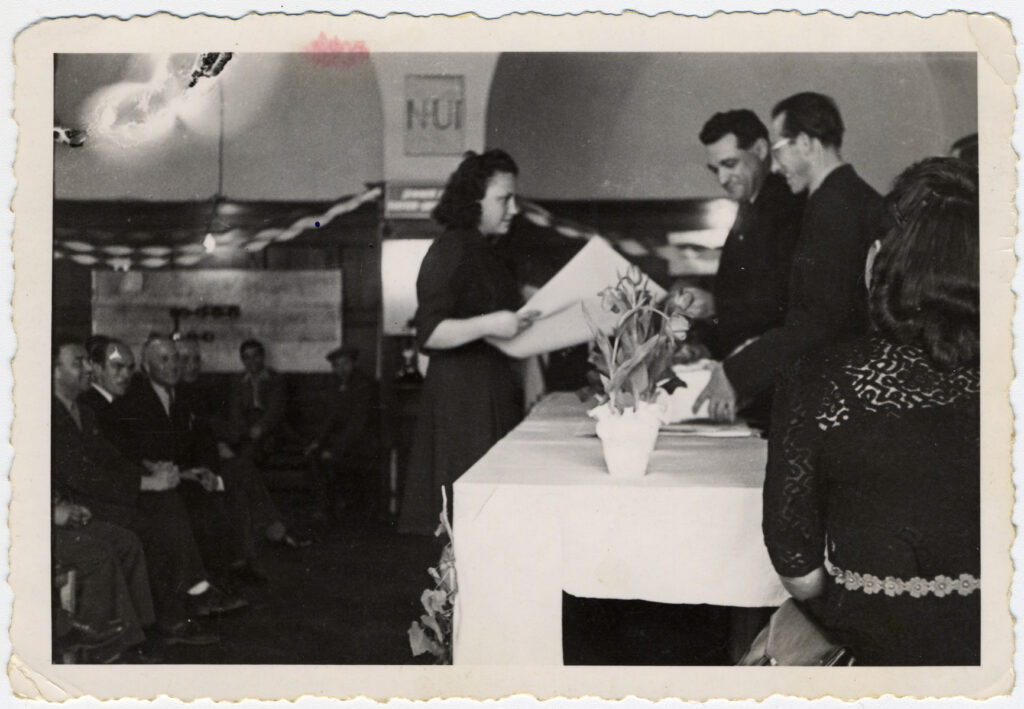
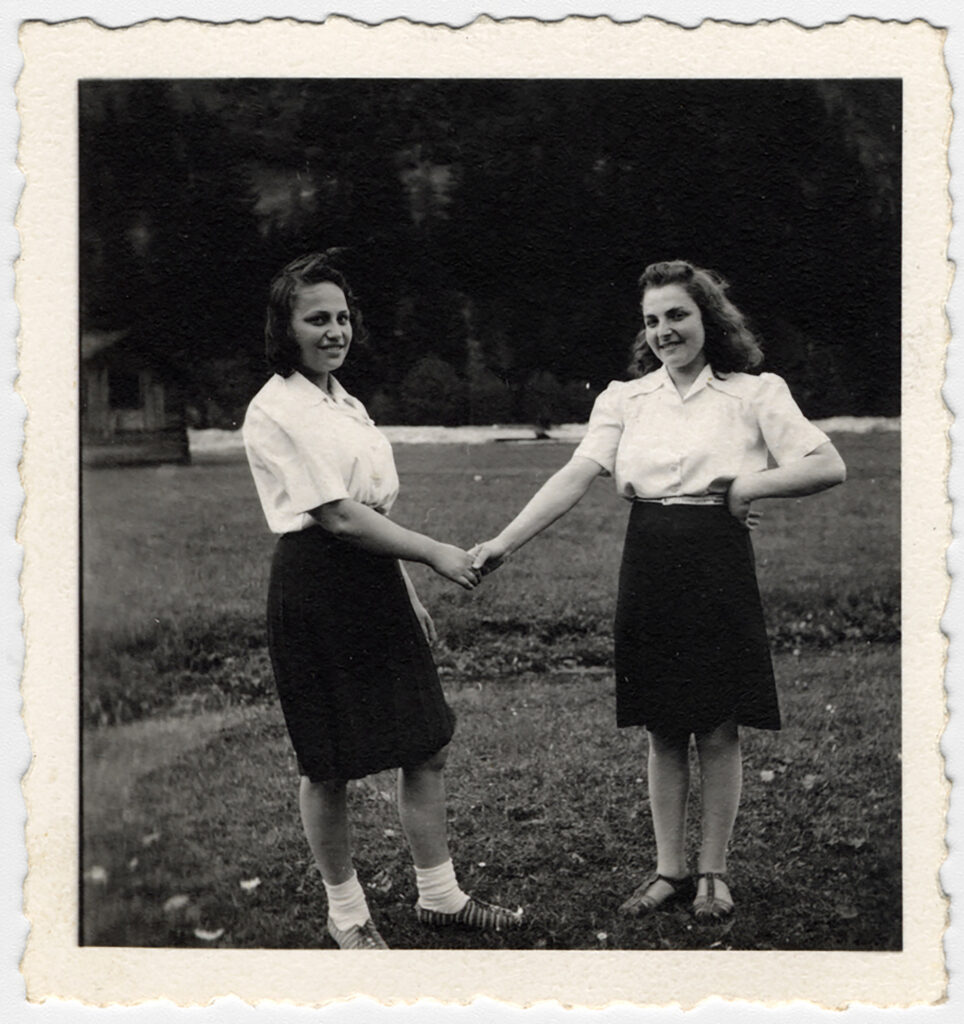
The Ass family eventually made their way to Austria, where they came to the Bad Gastein and Salzburg displaced persons’ camps. Esther and Chana attended the Hebrew Chaim Nachman Bialik School, and Itke organized a religious school for girls. Chana managed to contact relatives in Boston and joined a children’s transport to the United States.
The Ass family emigrated from Bremerhaven, Germany, to the United States in November 1948. Esther later married Moishe Pinchos Klug from Nisko, who survived being in Siberia during the war. Esther passed away in September 2025.